
Latest
June 24, 2026
Why Lawyers Are Moving to Shared Private Offices: A New Choice Balancing Professional Image, Client Privacy, and Operational Efficiency
Contents
- Why Lawyers Are Moving to Shared Private Offices: A New Choice Balancing Professional Image, Client Privacy, and Operational Efficiency
- 1. Establish a Professional Image While Reducing Setup Costs
- 2. Ensure Client Privacy and Confidentiality
- 3. Flexible Scalability for Growing Teams
- 4. Elevate the Client Meeting Experience
- 5. Expand Cross-Industry Collaboration and Lead Generation
- 1. Does it project a professional and credible business image?
- 2. Does it satisfy strict confidentiality and privacy requirements?
- 3. Is it equipped with comprehensive meeting and video conferencing technology?
- 4. Does it offer administrative support services?
- 5. Does it provide flexible scalability for future growth?
- Can lawyers use a shared office address as their official law firm registration address?
- Does working in a shared office compromise a lawyer’s professional image?
- Are shared offices suitable for legal teams?
Why Lawyers Are Moving to Shared Private Offices: A New Choice Balancing Professional Image, Client Privacy, and Operational Efficiency
As competition intensifies in the legal market, practice models diversify, and a new generation of lawyers embraces entrepreneurship, a growing number of legal professionals are reconsidering their workspace options.
Traditionally, practicing law required leasing conventional commercial office space and making substantial investments in renovation, equipment, and administrative staffing to establish a professional image. However, driven by digitalization and flexible working trends, shared private offices are emerging as the new workspace of choice for law firms, solo practitioners, and legal advisory teams.
Located in the heart of Taipei’s prestigious Xinyi District, T3CO Coworking Space offers private office environments that seamlessly balance a professional image, client privacy, and flexible scalability—empowering legal professionals to run their practices with greater efficiency.

Contents
- What Is a Shared Private Office? Why Are More Lawyers Adopting This Model?
- Why Shared Private Offices Are Ideal for Law Firms?
- 5 Key Priorities for Lawyers When Choosing an Office Space?
- How T3CO Coworking Space Helps Lawyers Establish a Professional Base?
- Which Legal Practice Workstyles Benefit Most from Shared Offices?
- Why the Xinyi District Is the Ideal Location for a Law Practice?
- FAQ | Frequently Asked Questions About Renting Shared Offices for Lawyers
- The Future of Legal Practice: How Workspace Models Are Evolving
What Is a Shared Private Office? Why More and More Lawyers Are Making the Switch
Shared private offices combine:
- Dedicated private offices
- Comprehensive business services
- Flexible lease terms
- Professional meeting facilities
Unlike traditional open-plan coworking spaces, shared private offices tailored for lawyers place a stronger emphasis on:
- Privacy protection
- Client confidentiality management
- A professional corporate image
- A stable work environment
As a result, this model has gained increasing favor among lawyers, CPAs, consultants, and other professional service providers in recent years.
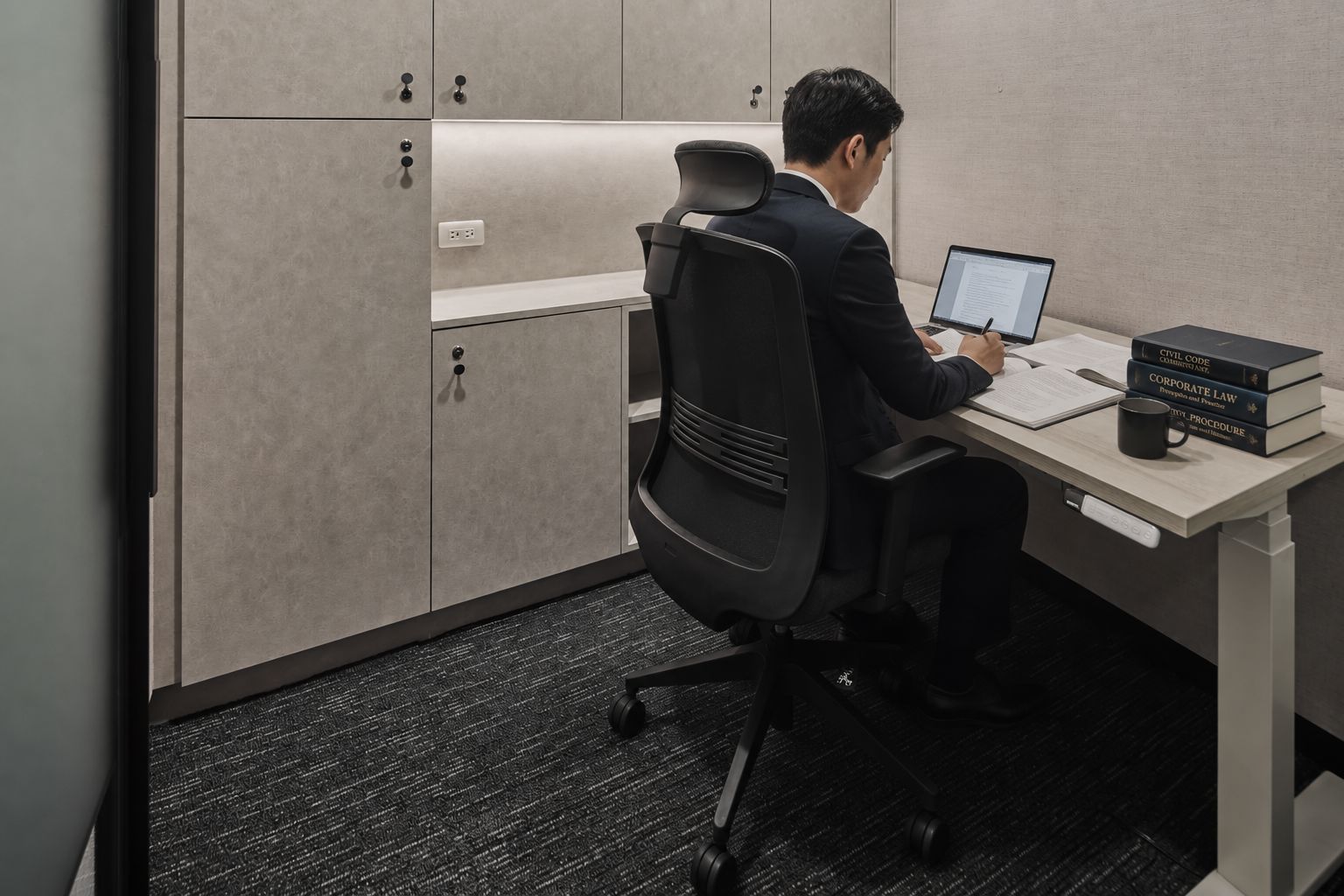
Why Are Shared Private Offices Ideal for Law Firms?
When starting a new practice, many legal teams typically begin with a compact footprint, such as:
- 1–3 practicing attorneys
- Legal advisory teams
- Small partner-led boutique firms
- Specialized legal consulting practices
Leasing a traditional commercial office right from the start often comes with significant burdens, including:
- High security deposit requirements
- Substantial upfront renovation costs
- Long-term lease commitments
- Administrative and reception staffing overhead
- IT infrastructure and network setup
Shared private offices effectively lower these barriers to entry, enabling lawyers to dedicate more resources toward client acquisition and high-value legal services.

5 Key Advantages of Shared Private Offices for Lawyers
1. Establish a Professional Image While Reducing Setup Costs
Shared private offices provide:
- A prestigious business address
- Fully furnished office spaces
- High-speed internet access
- Visitor reception services
- Professional meeting rooms and consultation spaces
Lawyers can establish a highly professional law firm image without committing substantial upfront capital.
2. Ensure Client Privacy and Confidentiality
Confidentiality is one of the most critical cornerstones of the legal profession.
Premium shared private offices are typically equipped with:
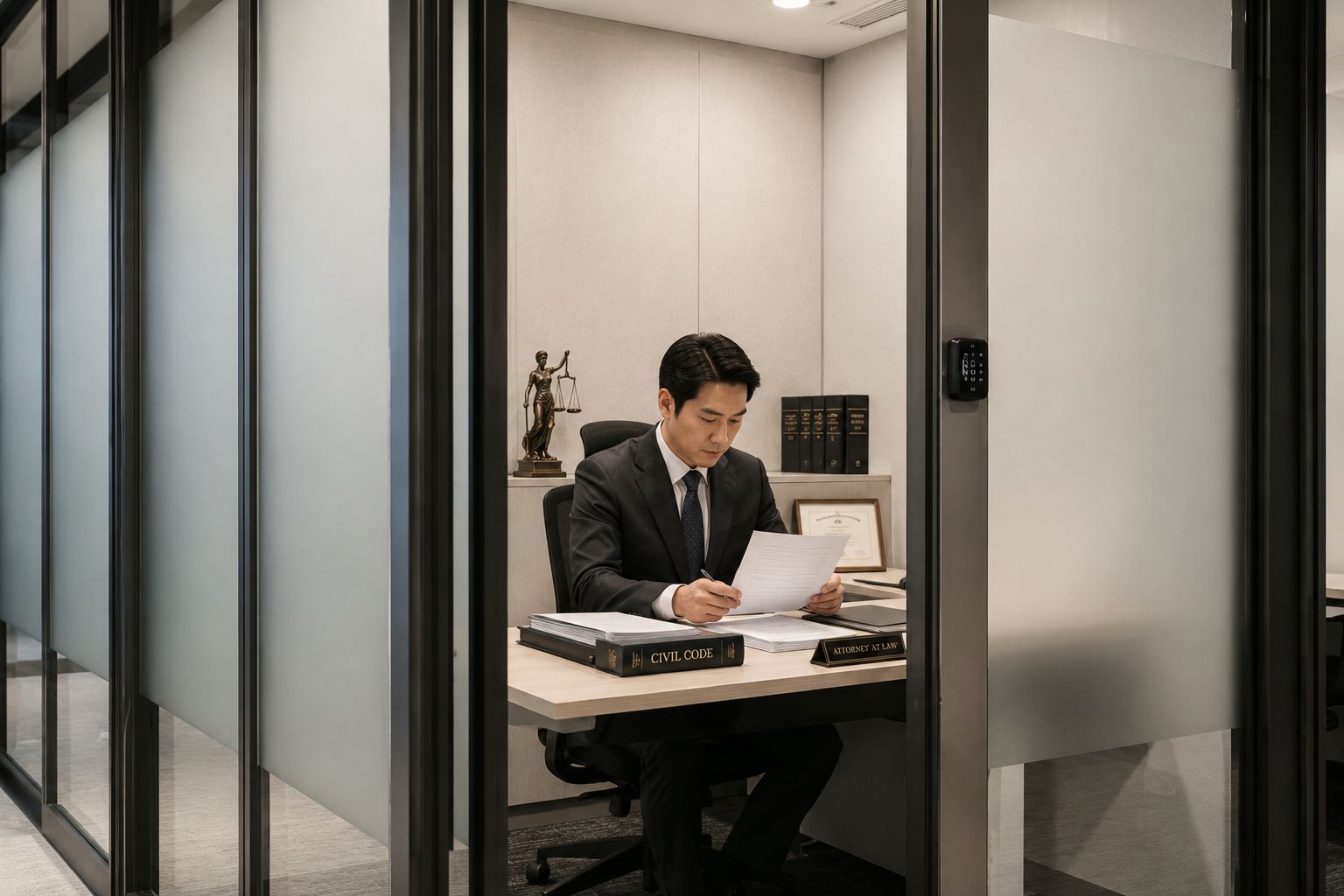
- Enclosed private offices
- Dedicated access control
- Lockable file storage
- Visitor registration protocols
- Private meeting rooms
These features allow lawyers to maintain strict confidentiality and professionalism during client consultations, case discussions, and contract reviews.

3. Flexible Scalability for Growing Teams
As caseloads expand, a law firm may need to:
- Hire trainee lawyers / legal interns
- Expand paralegal and support staff
- Add specialized practice groups
- Form dedicated project teams
The shared office model allows for seamless adjustments based on evolving needs:
- 1-person solo office
- 2–4 person legal team
- 5–10 person firm suite
This flexibility eliminates the need for frequent relocations and redundant office fit-outs.
4. Elevate the Client Meeting Experience
Legal services rely heavily on client trust.
Situated in prime, easily accessible commercial districts, shared offices offer:
- Professional reception services
- High-specification meeting rooms
- Comfortable lounge areas
- Well-designed visitor flow
These features significantly enhance client trust and elevate the professional image of both the attorney and the firm.
5. Expand Cross-Industry Collaboration and Lead Generation
Shared office spaces naturally bring together a diverse ecosystem of:
- Foreign corporations
- Startup teams
- Management consultancies
- CPA & accounting firms
- Investment institutions
In their day-to-day operations, these businesses frequently require support in:
- Corporate formation and structuring
- Contract review and drafting
- Labor and employment law compliance
- Intellectual property (IP) protection
- Mergers and acquisitions (M&A)
This co-working environment enables lawyers to naturally cultivate a broader professional network and unlock potential legal service opportunities.
5 Key Priorities for Lawyers When Choosing an Office Space
1. Does it project a professional and credible business image?
An office address serves as the crucial first impression of a law firm. Being situated in a prime business district significantly enhances:
- Client trust
- Brand professionalism
- Commercial partnership opportunities
2. Does it satisfy strict confidentiality and privacy requirements?
Legal practice involves a high volume of:
- Commercial secrets
- Litigation records
- Personal data
- Contractual documents
Consequently, space security and soundproofing quality are paramount considerations.
3. Is it equipped with comprehensive meeting and video conferencing technology?
Modern legal services increasingly rely on:
- Virtual consultations
- Remote meetings
- Online mediation
- Cross-border legal advisory services
Stable internet connectivity and state-of-the-art conferencing facilities have become essential requirements.
4. Does it offer administrative support services?
Attorneys are frequently away from the office for court appearances and client visits. On-site administrative staff can assist with:
- Mail and courier handling
- Service of process and court document receipt
- Visitor reception
- Phone messaging services
These services significantly reduce administrative burdens.
5. Does it provide flexible scalability for future growth?
A law firm’s footprint may expand rapidly as its caseload grows. Flexible lease terms and scalable workspaces minimize operational risk and optimize management efficiency.
How T3CO Coworking Space Helps Lawyers Establish a Professional Base
T3CO Coworking Space is far more than a physical workspace—it is a comprehensive business platform designed for professional service practitioners.
We provide:
- A prime business address in Taipei’s Xinyi District
- Private office spaces
- Ergonomic standing desks
- High-speed enterprise-grade network
- Professional visitor reception services
- Fully equipped meeting rooms
- Corporate administrative support
- Global business community resources
T3CO empowers lawyers to rapidly set up a distinguished, high-efficiency practice environment.

Which Legal Practice Models Benefit Most from Shared Private Offices?
The following legal practices and practitioners are particularly well-suited for this solution:
- Solo practitioners
- Boutique and small law firms
- Corporate legal consultants
- Intellectual property (IP) attorneys
- Foreign legal counsel
- Cross-border legal service teams
- Newly established law firms
This office model delivers a clear competitive advantage—especially for legal teams looking to operate on an asset-light model.
Why Is the Xinyi District the Ideal Location for a Law Firm?
Taipei’s Xinyi District has long served as one of Taiwan’s premier business and financial hubs.
The district brings together a high density of:
- Financial institutions
- Publicly listed companies
- Multinational corporations
- Investment firms
- Business management consultancies
Convenient transportation and rich business resources enable attorneys to seamlessly connect with potential clients and strategic partners.

FAQ | Frequently Asked Questions About Shared Offices for Lawyers
Can lawyers use a shared office address as their official law firm registration address?
Yes, provided it complies with relevant laws and regulatory guidelines. It is recommended to verify specific requirements with your local Bar Association prior to registration.
Does working in a shared office compromise a lawyer’s professional image?
Not at all. Today, many lawyers, CPAs, and professional consultants operate out of shared office spaces. What truly matters to clients is:
- Location and district
- Spatial quality and design
- Privacy management
- Professional business services
It is these factors—rather than whether an office is shared—that define a practice’s credibility.
Are shared offices suitable for legal teams?
Absolutely. From solo practitioners to legal teams of up to 10 people, law firms can leverage flexible membership plans to reduce fixed overhead while retaining room for future expansion.
The Future of Legal Practice: How Workspace Models Are Evolving
The true value of legal services stems from expertise and client trust, not overhead-heavy physical space.
Shared private offices are more than a cost-reduction strategy; they represent a modern way of practicing law that seamlessly integrates:
- Professional image
- Client privacy
- Team agility
- Operational efficiency
- Business expansion
Located in the heart of the Xinyi District, T3CO Coworking Space combines private office suites with a global business community—empowering attorneys to establish a distinguished, high-efficiency practice while minimizing operational risk.
If you are looking for an office space that offers privacy, security, and a compelling professional presence, T3CO Coworking Space is your ideal choice.
Related Posts
Explore the new trends in coworking to help you stand out in the era of remote work.

Why AI Startups Thrive in Coworking Spaces: 5 Key Benefits from Cost Flexibility to Talent Acquisition and Brand Image
Why Cross-Border E-Commerce Needs Coworking Spaces: 6 Essential Operational Advantages for Brands Going Global
Expanding into Taiwan? Skip the Full-Floor Lease. Hybrid Office Solutions for Teams of 1–10.
2026 Hybrid Work New Normal | Recommended Co-working Spaces in Taipei